




The Visual Language of Artificial Intelligence: Shaping the Future of Technology
Artificial Intelligence (AI) is no longer just a concept discussed in research papers or science fiction. It has become an integral part of modern businesses, products, and everyday life. As AI continues to evolve, the way we visually represent AI plays a crucial role in how people understand, trust, and engage with this technology.
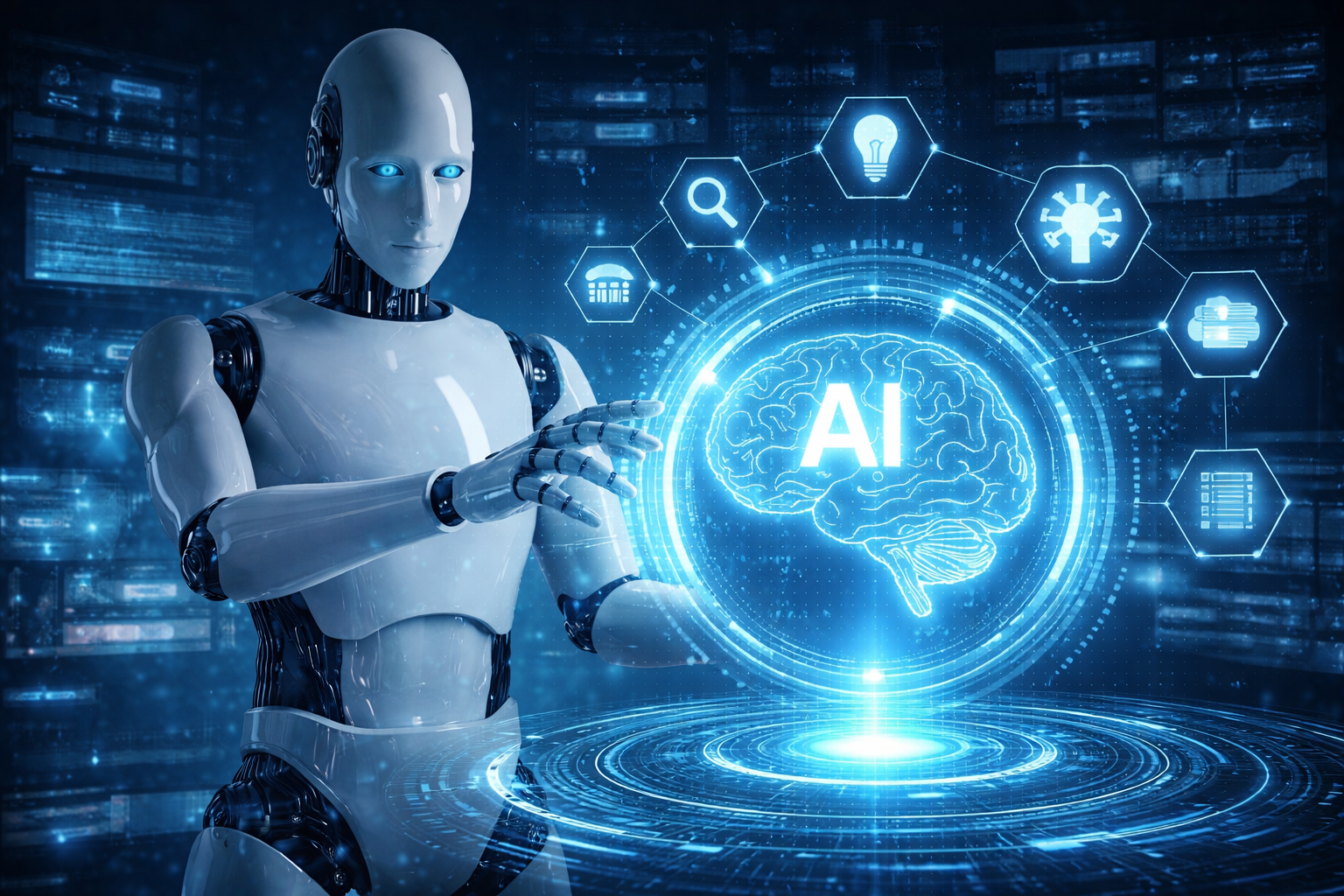
From glowing neural networks to humanoid robots interacting with holographic interfaces, AI visuals have become a powerful storytelling tool—one that bridges the gap between complex algorithms and human imagination.
Why AI Visual Design Matters
AI systems often operate behind the scenes, making them difficult for users to fully grasp. Strong visual design helps translate abstract intelligence into something relatable and intuitive.
Well-crafted AI visuals:
- Simplify complex technological concepts
- Build trust and transparency with users
- Enhance brand identity in a competitive tech landscape
- Communicate innovation, precision, and scalability
A futuristic AI design instantly signals progress, intelligence, and reliability.
Common Elements in Modern AI Visuals
Today’s AI imagery follows a distinct visual language that has become widely recognizable across industries.
1. Humanoid Robots
Humanoid robots symbolize the fusion of human intelligence and machine precision. Their clean, minimal design represents efficiency, logic, and adaptability—key traits of AI-driven systems.
2. Glowing Neural Networks
The brain-shaped hologram has become a universal symbol of AI. It visually represents machine learning models, deep neural networks, and data processing in a way that feels both futuristic and familiar.
3. Holographic Interfaces
Floating dashboards, circular UI elements, and connected icons highlight real-time processing, automation, and seamless data flow—core strengths of AI-powered platforms.
4. Blue and Neon Color Palettes
Cool tones like blue and cyan are often used to convey trust, intelligence, and stability, while neon accents emphasize innovation and cutting-edge technology.
How AI Visuals Enhance Brand Communication
Visual consistency is essential for building a strong digital presence. AI-themed designs allow brands to communicate their technological capabilities instantly—without needing long explanations.
For official websites, blogs, and product pages, AI visuals:
- Increase engagement and time spent on pages
- Improve first impressions for potential clients
- Reinforce a brand’s positioning as forward-thinking
- Complement technical content with visual clarity
When users see intelligence, they are more likely to trust it.
AI Design as a Storytelling Tool
Beyond aesthetics, AI visuals tell a story—of innovation, transformation, and future readiness. Whether showcasing automation, data intelligence, or smart decision-making, the right design helps convey your message faster and more effectively than words alone.
A single AI illustration can communicate:
- Advanced problem-solving
- Human–machine collaboration
- Scalability and performance
- A vision for the future